Best By vs. Use By vs. Sell By: What Date Labels Mean
Only one food in the U.S. needs a federally required date: infant formula. Everything else is the maker's call, and most of those dates are about quality. What each phrase means, what actually decides whether food is safe, and how to read an egg carton.
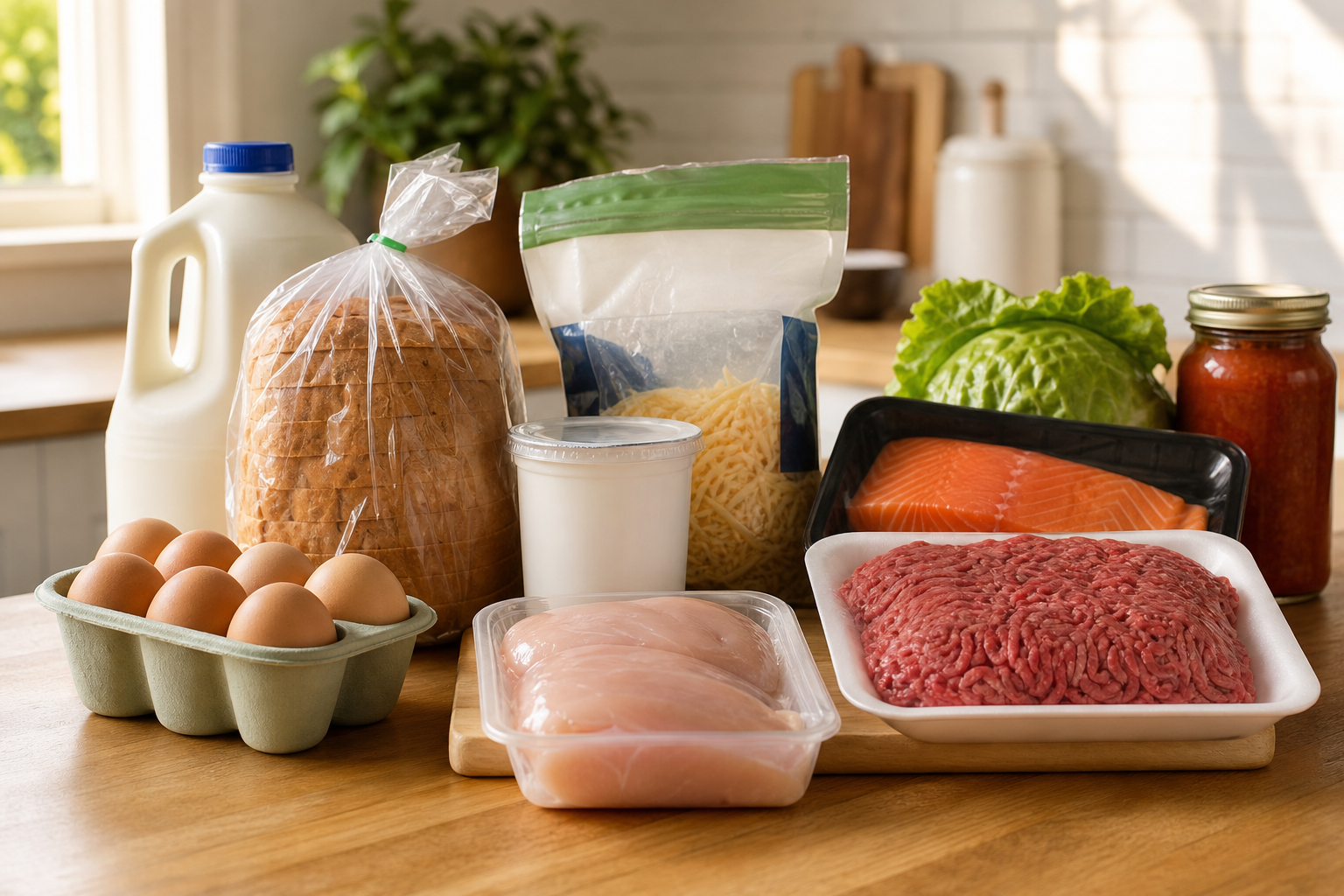
The date on a package is almost never a safety date. Under U.S. federal law, the only food that must carry a date is infant formula. Every other date, from the “Best if Used By” on a jar of salsa to the “Sell-By” on a pack of chicken, is the manufacturer’s own estimate, and most of them describe quality, not safety.
That confusion costs money. FDA estimates that about 20% of the food thrown away at home goes out because of confusion over date labels. Here is what each phrase means, according to USDA’s Food Safety and Inspection Service, and what you should look at instead.
The phrases, decoded
| Phrase | What it means | Who it’s for | Safety date? |
|---|---|---|---|
| Best if Used By / Best By | When the product is at its best flavor or quality | You | No |
| Use-By | The last date recommended for peak quality | You | No, except infant formula |
| Sell-By | How long the store should display it | The store | No |
| Freeze-By | When to freeze it to keep peak quality | You | No |
| Pack date (eggs, cans) | When it was packed, often coded | Store and recalls | No |
| Infant formula Use-By | Nutrients and quality guaranteed to this date | You | Yes, required by FDA |
USDA and FDA both back “Best if Used By” as the standard phrase for quality dates, because it says what it means. Not every maker uses it, so you’ll still see the full mix.
What the law actually requires
At the federal level, very little. FDA requires a use-by date on infant formula, because nutrient content declines over time and the formula may be an infant’s only food. Past that, federal rules require that any date shown is truthful and not misleading, and that a calendar date on meat or poultry be paired with a phrase explaining it, like “Sell By” or “Use Before”.
States can add their own rules, and some do, mostly for milk. That’s why the same product can carry different date wording in different parts of the country.
What actually decides whether food is safe
Time and temperature. A sealed package of chicken that sat in a 50 °F fridge for a day can be riskier than one a few days past its sell-by date that stayed at 38 °F. The printed date can’t know how the food was handled after it left the plant.
The numbers that matter:
- Fridge at or below 40 °F (4 °C). Above that, bacteria multiply faster. A fridge thermometer is the cheapest food-safety tool you can own.
- Freezer at 0 °F (−18 °C). Food kept at 0 °F stays safe indefinitely. The months on freezer charts are for quality.
- The 2-hour rule. Perishable food left out more than 2 hours, or 1 hour above 90 °F, should be thrown away whatever the date says.
Once you open a package, the printed date stops applying and the storage time for that food takes over. USDA’s cold storage times are collected on one page in our fridge and freezer storage times chart.
Common products, date versus reality
These are USDA FoodSafety.gov storage times. They start when you get the food home or open it, not on the printed date.
| Product | Typical date on pack | Fridge time once home or opened | Freezer |
|---|---|---|---|
| Raw ground beef or turkey | Sell-By | 1–2 days | 3–4 months |
| Raw chicken pieces | Sell-By | 1–2 days | 9 months |
| Fresh steaks | Sell-By | 3–5 days | 4–12 months |
| Lunch meat, opened | Use-By | 3–5 days | 1–2 months |
| Lunch meat, unopened | Use-By | 2 weeks | 1–2 months |
| Hot dogs, opened | Use-By | 1 week | 1–2 months |
| Bacon | Use-By | 7 days | 1 month |
| Raw eggs in shell | Pack date and Sell-By | 3–5 weeks | Don’t freeze in shell |
If the sell-by date on raw chicken is three days away when you buy it, it doesn’t buy you three extra days. Cook or freeze it within 1 to 2 days. If you freeze it, thaw it safely: how to thaw meat safely covers the three methods USDA accepts.
How to read an egg carton
Eggs from USDA-graded plants carry a three-digit pack date: the day of the year the eggs were washed, graded and packed, from 001 for January 1 to 365 for December 31. A carton stamped 290 was packed on October 17 in a non-leap year.
Many cartons also show a sell-by or expiration date. Either way, USDA’s guidance is the same: raw eggs in the shell keep 3 to 5 weeks in the fridge from the day you buy them. Store them in the carton on a shelf, not in the door, where the temperature swings every time you open it.
When to throw it out anyway
The date can be fine and the food can still be bad. Throw it out if:
- It has been in the danger zone, 40 to 140 °F, for more than 2 hours.
- It shows spoilage: an off smell, a slimy texture, mold where mold doesn’t belong.
- It’s a leftover past 3 to 4 days in the fridge. See how to store leftovers.
Smell and appearance tell you about spoilage bacteria, which change food you can see. The bacteria that cause foodborne illness usually don’t change how food looks, smells or tastes. That’s why time and temperature matter more than a sniff test.
If you’re in a higher-risk group
Pregnant people, adults 65 and older, young children and people with weakened immune systems get sicker from foodborne illness, and a few foods matter more for them. Listeria can grow at fridge temperature, which is why CDC advises these groups to heat deli meats and hot dogs to 165 °F or until steaming hot before eating. For this group, treat refrigerated ready-to-eat foods strictly by storage time, not by the date or the smell. Our safe internal cooking temperatures page lists every target.
The short version
- Infant formula: obey the use-by date.
- Everything else: the date is a quality guide from the maker.
- Raw meat and poultry: cook or freeze within the USDA fridge time, whatever the sell-by says.
- Opened packages: the storage clock starts at opening.
- Frozen at 0 °F: safe indefinitely, best within the chart’s months.
Sources
- USDA Food Safety and Inspection Service, Food Product Dating.
- U.S. Food and Drug Administration, Confused by Date Labels on Packaged Foods?
- FoodSafety.gov, Cold Food Storage Chart.
- USDA Food Safety and Inspection Service, Shell Eggs from Farm to Table.
- Centers for Disease Control and Prevention, Listeria: People at Risk and Prevention.
Questions we get
Is it safe to eat food after the best-by date?
Often, yes. USDA says 'Best if Used By' describes when a product is at its best quality, not when it becomes unsafe. If it has been stored properly and shows no spoilage, such as an off smell, flavor or texture, quality may be lower but the date alone doesn't make it unsafe. Infant formula is the exception.
What does sell-by mean?
It tells the store how long to display the product for inventory. It is not a safety date. Milk, meat and other perishables are commonly sold with a sell-by date and stay good for a while after it if your fridge is at 40 °F or below.
Can I use infant formula after the use-by date?
No. Infant formula is the one product where FDA requires a use-by date, and it should not be used after it. Nutrient content and quality are only guaranteed up to that date.
How long are eggs good after I buy them?
USDA puts raw eggs in the shell at 3 to 5 weeks in the fridge from the day you buy them. The carton's three-digit pack date, 001 to 365, tells you which day of the year they were packed.
Does the date still apply once I open the package?
No. Printed dates assume the package is sealed. Once opened, the storage clock for that food applies: opened lunch meat, for example, is 3 to 5 days in the fridge regardless of the date on the pack.
Who stands behind this post
Mara Ellison
EditorEdits the desk: every test plan, every post, every correction. Twelve years in food and tech journalism.
- Posts written
- 12
- Posts reviewed
- 11
Dr. Iris Kwan, RD
Nutrition reviewerRegistered dietitian. Reviews every app post and label guide before it publishes, and signs them.
Signs: App posts and label guides
- Posts written
- 0
- Posts reviewed
- 34
Corrections. Spotted a wrong figure? Email desk@foodblogblog.com. We correct within five business days and date the change. No link on this page carries an affiliate tag yet. When a shop program opens, tagged links will be marked.