How to Freeze Meal Prep Without Freezer Burn
Freezer burn is air on the food's surface. Squeeze out the air, cool the food first, freeze it flat, keep the freezer at 0 °F, and add no more than 2 to 3 lb of unfrozen food per cubic foot a day.
Guides
Calibration, logging and measuring habits that change the numbers more than the gear does.
Most of the error in a calorie log is not the app or the scale. It is weighing cooked food against a raw label, guessing a portion, or leaving leftovers out too long. These guides fix the habits first, with the temperatures and times checked against USDA FSIS and FDA.
Freezer burn is air on the food's surface. Squeeze out the air, cool the food first, freeze it flat, keep the freezer at 0 °F, and add no more than 2 to 3 lb of unfrozen food per cubic foot a day.
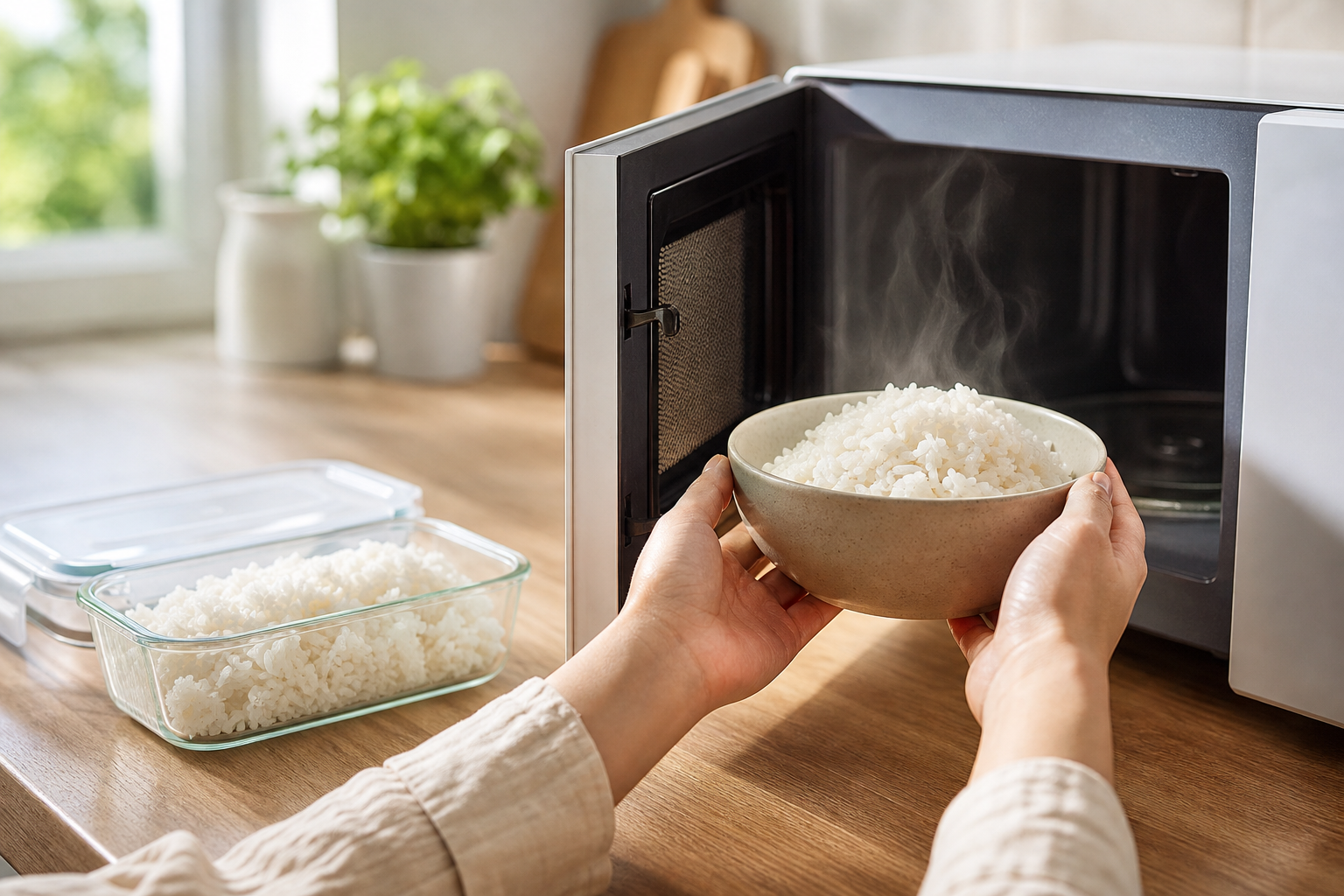
Reheating isn't the risk. Time spent warm is. Bacillus cereus spores survive cooking, and if rice sits out, they can make a toxin that reheating won't destroy. Cool it within an hour, chill it, reheat it once.
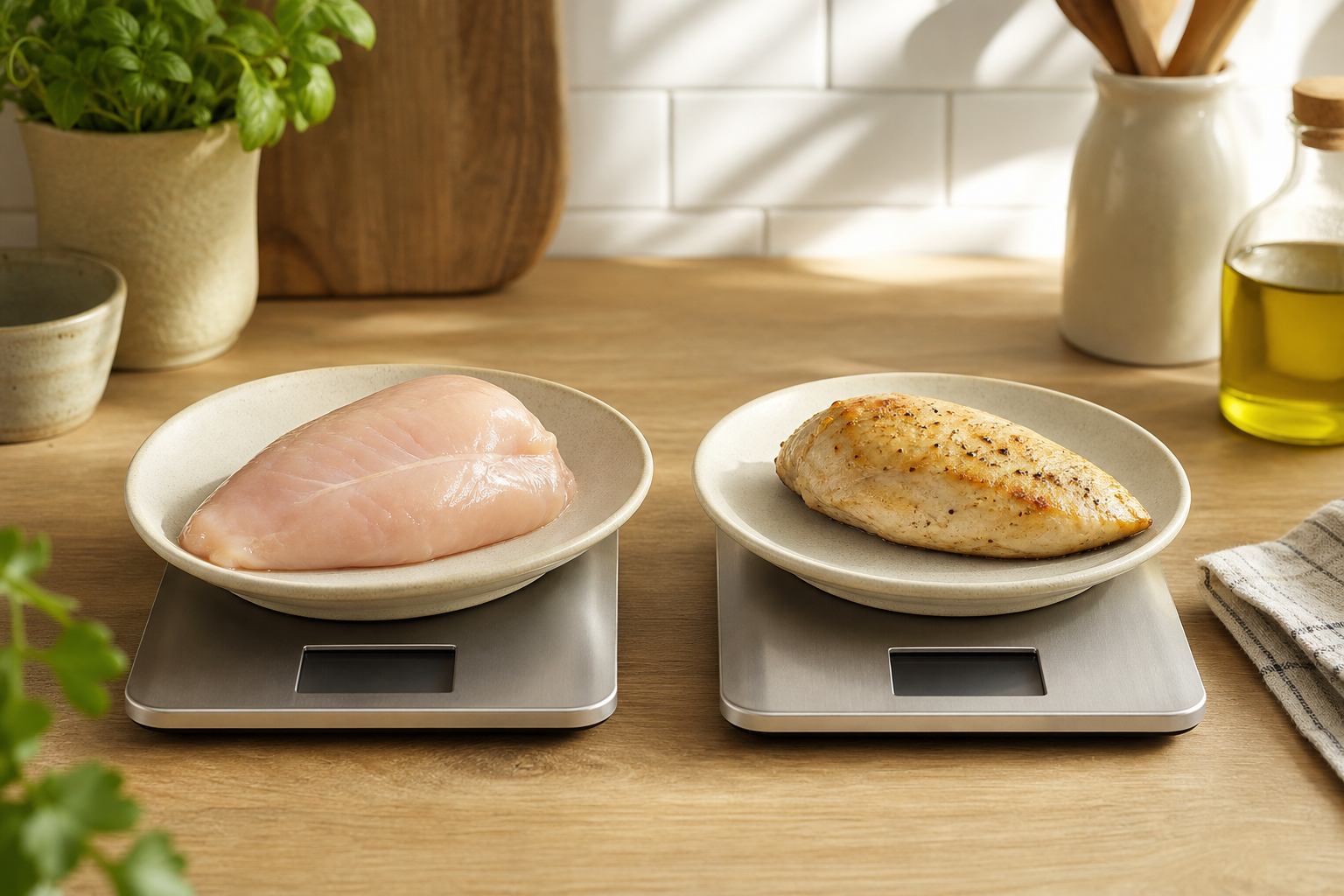
Either works, if the database entry matches the state you weighed. Mix them up and 100 g of cooked rice logs as 365 calories instead of 130, and 100 g of roast chicken as 120 instead of 165.
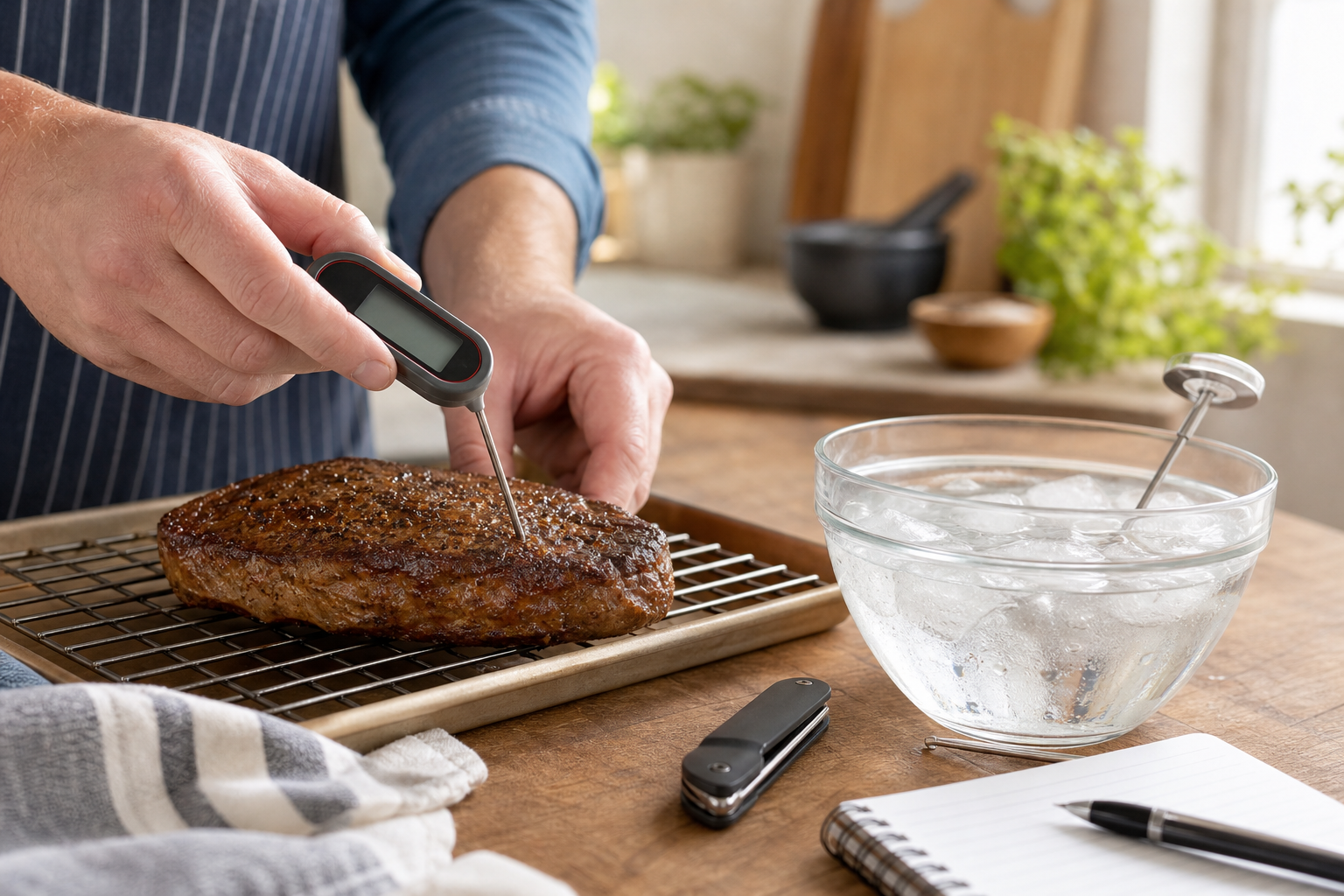
A thermometer is only as good as where you put it and whether it reads true. Probe the thickest part, away from bone and fat, and check it in ice water: it should read 32 °F. Boiling water reads 212 °F only at sea level.
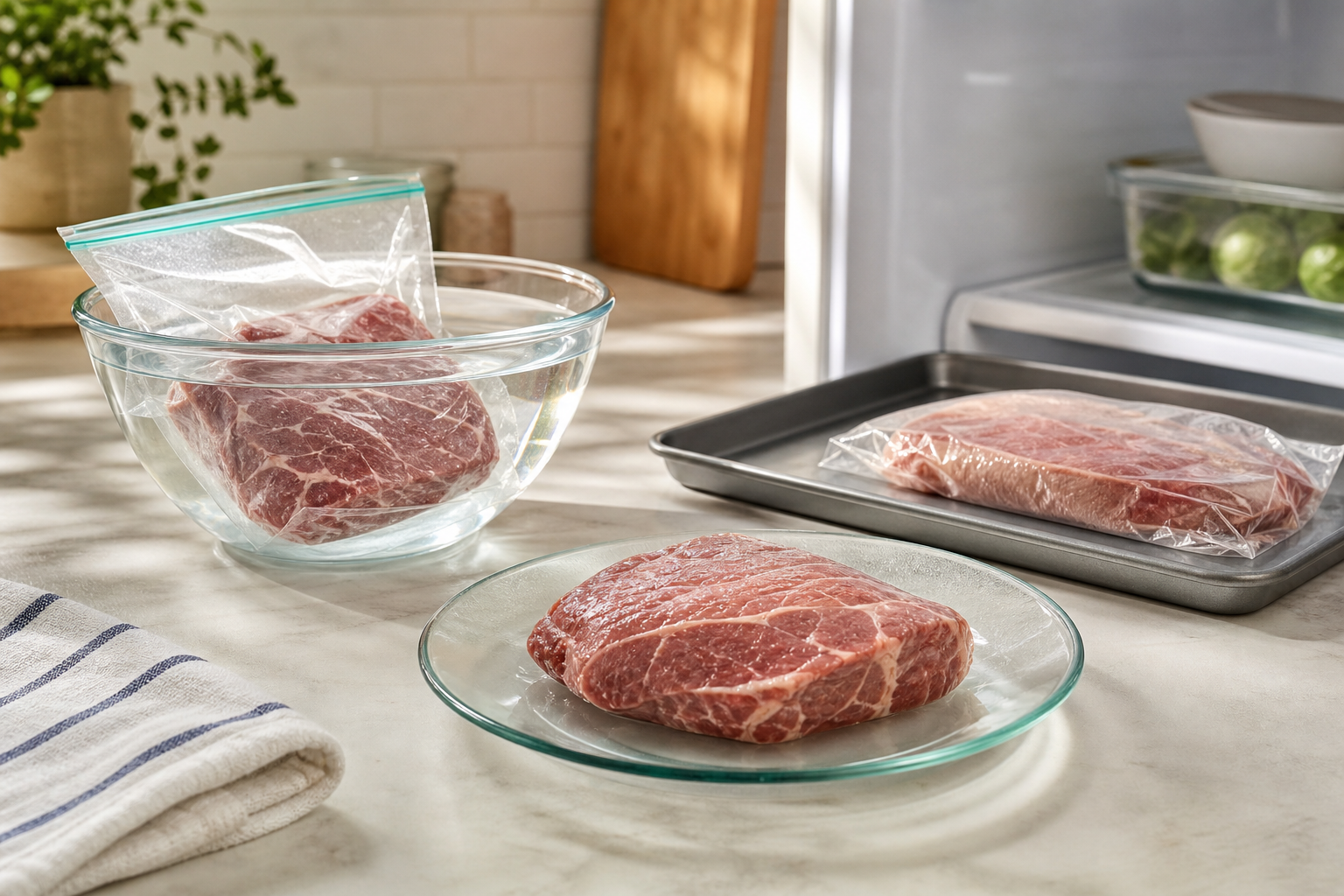
USDA approves three ways to thaw meat: the fridge, cold water, and the microwave. A pound of ground beef takes about a day in the fridge or about 30 minutes in cold water. The counter isn't on the list.
Into the fridge within 2 hours, in shallow containers, at 40 °F or below. Eat within 3 to 4 days or freeze. Reheat to 165 °F. Those four numbers from USDA cover almost every leftover you'll make.