How to Freeze Meal Prep Without Freezer Burn
Freezer burn is air on the food's surface. Squeeze out the air, cool the food first, freeze it flat, keep the freezer at 0 °F, and add no more than 2 to 3 lb of unfrozen food per cubic foot a day.
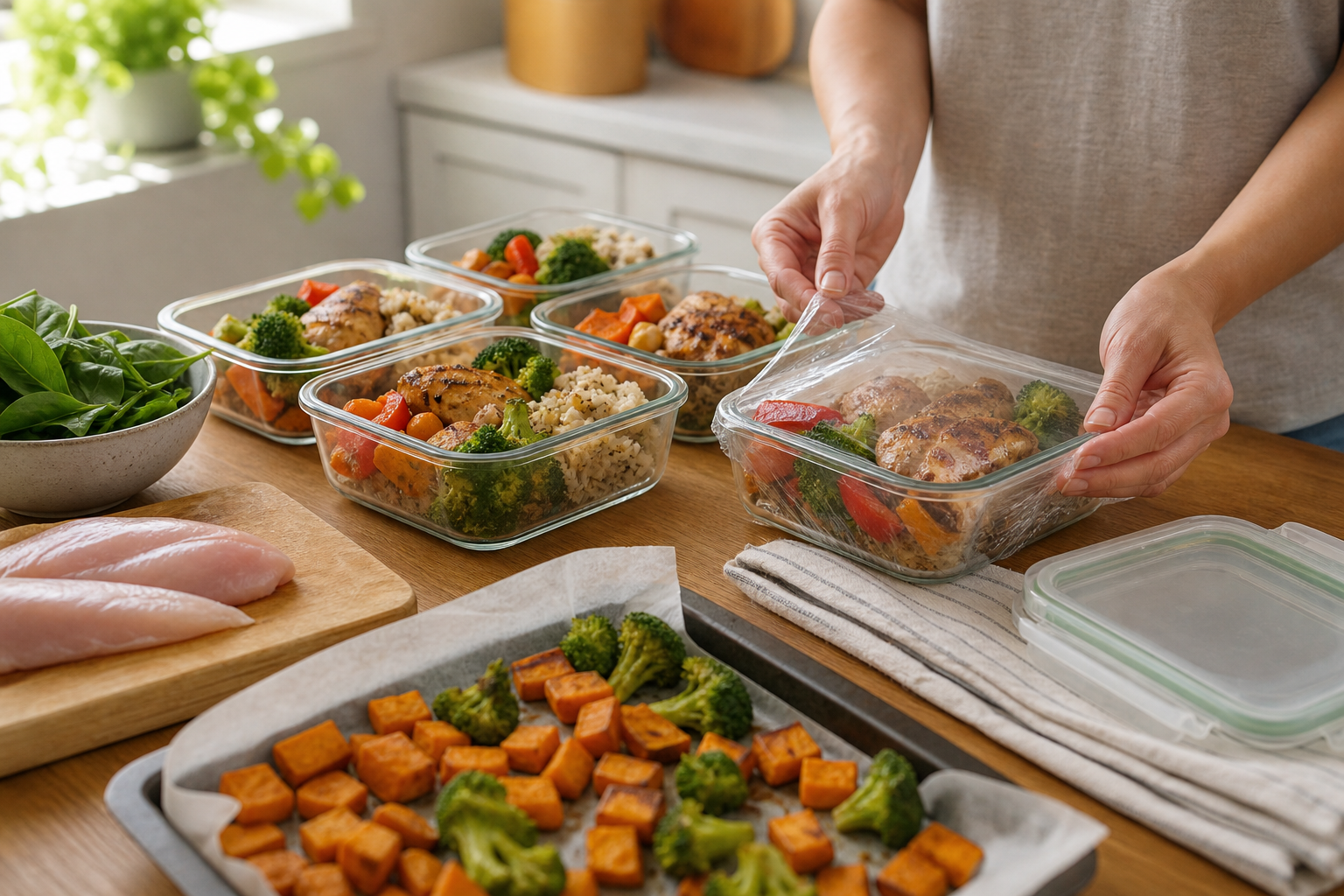
Freezer burn happens when air reaches the surface of frozen food. Ice on the surface turns straight to vapor, leaves the food dry and grayish, and the patch tastes of the freezer. USDA’s Food Safety and Inspection Service is clear that it’s safe to eat. It’s also avoidable, and the fixes are mostly about air, temperature and how much you freeze at once.
The short version: cool the food first, portion it, get the air out, freeze it flat, and keep the freezer at 0 °F (−18 °C). The rest of this guide puts numbers on each step.
Step 1: Cool it before it goes in
Cook, then cool in the fridge in shallow containers, two inches deep or less. Hot food in the freezer warms everything around it. Partly thawed neighbors refreeze with larger ice crystals, and large crystals are what make thawed food watery.
Don’t let it sit on the counter to cool. The 2-hour limit from our leftovers guide applies to meal prep too: from the stove to the fridge within 2 hours, 1 hour if the kitchen is above 90 °F.
Step 2: Don’t overload the freezer
A freezer can only pull so much heat out in a day. The National Center for Home Food Preservation sets the limit at 2 to 3 lb of unfrozen food per cubic foot of freezer capacity in 24 hours. Go over and the food freezes slowly, the crystals grow, and the frozen food already in there warms up.
| Freezer size | Most you should add in 24 hours |
|---|---|
| 2 cu ft, small freezer drawer | 4–6 lb |
| 5 cu ft, chest or upright | 10–15 lb |
| 7 cu ft | 14–21 lb |
| 15 cu ft | 30–45 lb |
A Sunday batch of ten 400 g meals is about 8.8 lb. That fits a 5 cu ft chest freezer in one day. It doesn’t fit a 2 cu ft drawer, so freeze half on Sunday and the rest on Monday, with the second half waiting in the fridge.
Step 3: Get the air out
Air is the cause of freezer burn, so every container choice comes down to how much air it leaves against the food.
Zip-top freezer bags. Fill, then press the air out from the bottom up before you seal the last inch. Dipping the filled bag in a bowl of water, seal just above the waterline, pushes air out without a machine. Use freezer bags, not storage bags; they’re thicker.
Rigid containers. Fill them close to the top so there’s little air above the food, but leave room for liquids to expand. For soups and stews in wide-mouth containers, the National Center for Home Food Preservation calls for 1/2 inch of headspace in a pint and 1 inch in a quart. A piece of plastic wrap pressed onto the surface before you put the lid on cuts the air gap further.
Vacuum-sealed bags. These remove the most air. Liquids need to be frozen solid in a tray first, then sealed.
Step 4: Freeze it flat
Lay filled bags flat on a sheet pan until they’re solid, then stand them up like files. A flat, thin pack freezes faster than a block, which means smaller ice crystals, and it thaws faster later. It also stacks without gaps, and a full, organized freezer loses less cold every time you open it.
Step 5: Label with the date and the grams
Write three things on every container: what it is, the date you froze it, and the weight of the portion. The date tells you where it is in the quality window. The weight is for your log.
If you track calories, weigh each portion as it goes into its container and write the grams and calories on the label. Thawed food loses some liquid, and a frozen block is hard to portion, so the weight at packing time is the most reliable number you’ll get. For a whole batch, use the one-time weigh in should you weigh food raw or cooked: total calories divided by total cooked grams, then multiplied by the grams in each container.
How long frozen meal prep keeps its quality
Food kept at 0 °F stays safe indefinitely. These USDA FSIS times are for taste and texture:
| Meal prep | Freezer, for quality |
|---|---|
| Cooked meat or poultry | 2–6 months |
| Soups and stews | 2–3 months |
| Cooked fish | 4–6 months |
| Chicken nuggets or patties | 1–3 months |
| Pizza | 1–2 months |
| Raw ground meat or ground poultry | 3–4 months |
| Raw poultry pieces | 9 months |
The full list is in our fridge and freezer storage times chart. Check your freezer with an appliance thermometer. The times assume 0 °F, and a freezer that runs at 10 °F wears down quality faster.
What not to freeze
Some foods don’t come back from the freezer in usable shape. Leave these out of the container and add them after reheating:
- Mayonnaise and cream-based dressings, which separate.
- Lettuce, salad greens and raw cucumber, which go limp and watery.
- Cooked egg whites, which turn rubbery.
- Fried food, which goes soggy.
- Potatoes in soups and stews, which turn grainy.
- Sauces thickened with flour or cornstarch, which can separate. Thicken after reheating if you can.
Cooked rice and pasta freeze well. Pull the pasta a minute or two early so it doesn’t go soft when you reheat it, and handle rice with the cooling rules in is it safe to reheat rice.
Thawing and reheating
Thaw meal prep in the fridge overnight, or reheat it straight from frozen. Don’t thaw it on the counter. Our guide to thawing meat safely covers the cold-water and microwave methods and when you can refreeze.
Reheat to 165 °F (74 °C) in the center, and bring soups and sauces to a rolling boil. From frozen, a microwave needs stirring at least once; check the middle with a thermometer, because the edges heat first.
Who should be stricter
Pregnant people, adults 65 and older, young children and people with weakened immune systems are more likely to get seriously ill from food poisoning. For them, freeze meal prep on the day it’s cooked, reheat everything to 165 °F, and skip containers with no date on them.
Sources
USDA Food Safety and Inspection Service, Freezing and Food Safety.
FoodSafety.gov, Cold Food Storage Chart.
National Center for Home Food Preservation, Preparing and Packing Foods for Freezing.
USDA Food Safety and Inspection Service, Leftovers and Food Safety.
Questions we get
Is freezer-burned food safe to eat?
Yes. USDA says freezer burn is a quality problem, not a safety one. The dry, grayish patches are where air dried the surface. Cut them off before or after cooking, or accept a drier result.
How long does frozen meal prep last?
At 0 °F it stays safe indefinitely. For quality, USDA FSIS gives cooked meat or poultry 2 to 6 months, soups and stews 2 to 3 months, pizza 1 to 2 months and cooked fish 4 to 6 months.
Can I freeze food while it's still warm?
Cool it in the fridge first, in shallow containers. Warm food raises the temperature of everything around it, and too much at once slows freezing for the whole load. The National Center for Home Food Preservation caps a day's load at 2 to 3 lb per cubic foot of freezer space.
What meal prep doesn't freeze well?
Mayonnaise and cream-based dressings, lettuce, raw cucumber, cooked egg whites, fried food and potatoes in soup. Sauces thickened with flour or cornstarch can separate. Freeze the base and add those after you reheat.
Who stands behind this post
Dev Patel
Tester, kitchen gearTests scales, thermometers, air fryers and storage gear. Former restaurant equipment buyer.
- Posts written
- 17
- Posts reviewed
- 0
Dr. Iris Kwan, RD
Nutrition reviewerRegistered dietitian. Reviews every app post and label guide before it publishes, and signs them.
Signs: App posts and label guides
- Posts written
- 0
- Posts reviewed
- 34
Corrections. Spotted a wrong figure? Email desk@foodblogblog.com. We correct within five business days and date the change. No link on this page carries an affiliate tag yet. When a shop program opens, tagged links will be marked.