Is It Safe to Reheat Rice? What the Risk Actually Is
Reheating isn't the risk. Time spent warm is. Bacillus cereus spores survive cooking, and if rice sits out, they can make a toxin that reheating won't destroy. Cool it within an hour, chill it, reheat it once.
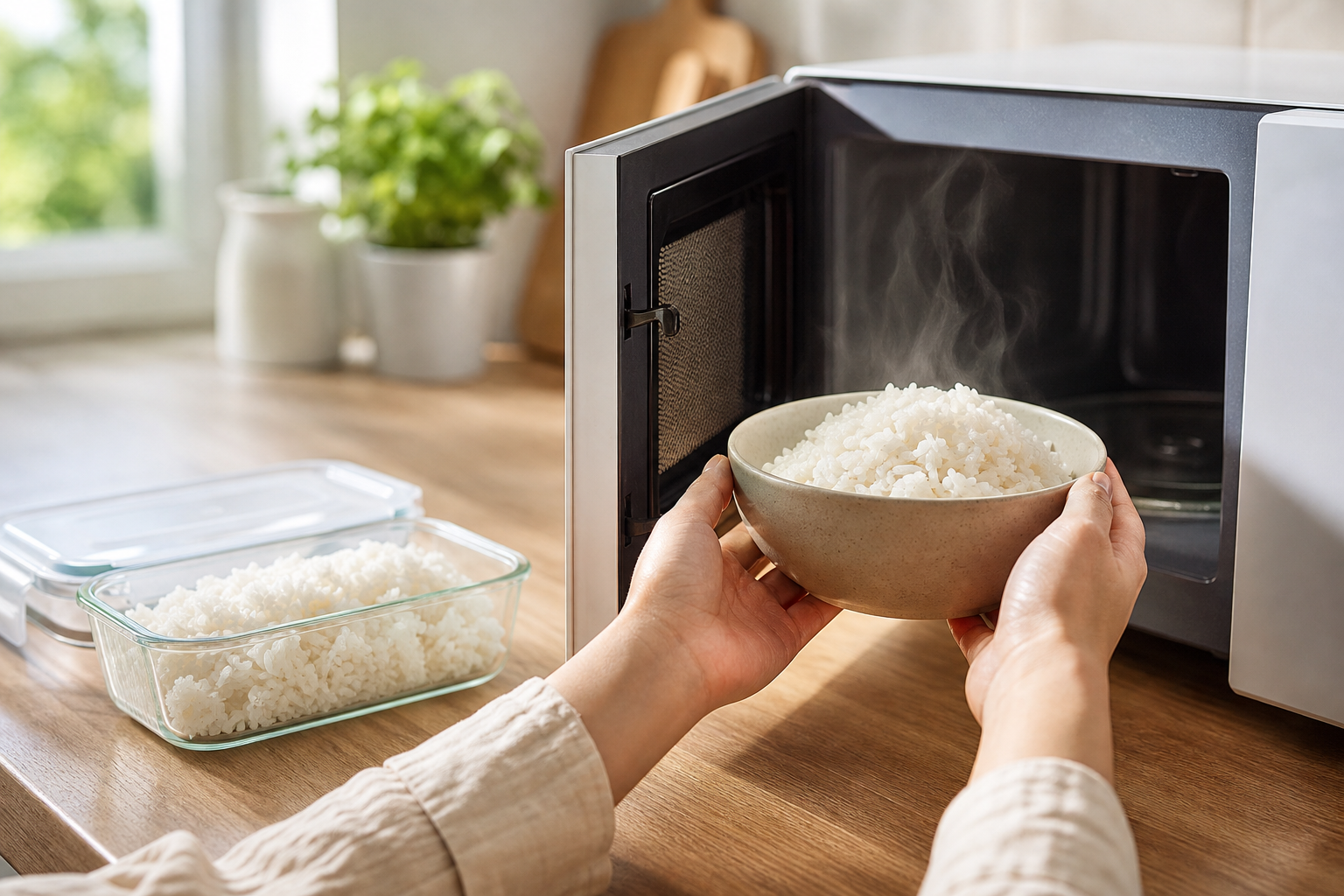
Yes, you can reheat rice safely. The risk people have heard about is real, but it isn’t the reheating. It’s what happens to cooked rice while it sits warm before anyone puts it away.
Rice carries spores of a bacterium called Bacillus cereus. The spores survive boiling. If cooked rice stays in the 40 to 140 °F (4 to 60 °C) danger zone for long enough, the spores germinate, the bacteria multiply, and one strain makes a toxin called cereulide. According to the FDA’s Bad Bug Book, that toxin is heat-stable. Reheating kills the bacteria and leaves the toxin, which is why rice that sat out on the stove all afternoon can make you sick however hot you microwave it.
So the rules for rice are about time, not temperature at the end. The UK’s NHS states them plainly: cool rice within 1 hour, keep it in the fridge no more than 1 day before reheating, reheat it only once, and make sure it’s steaming hot all the way through.
Why rice gets its own rules
Most leftovers follow USDA’s general timing: refrigerate within 2 hours, eat within 3 to 4 days, reheat to 165 °F (74 °C). Our guide to storing leftovers covers that routine.
Rice is stricter for two reasons. Its spores survive cooking, so cooked rice isn’t starting clean. And its main toxin survives reheating, so the usual safety net, heat it to 165 °F, doesn’t fully work. Prevention has to happen before the rice goes in the fridge.
What the illness looks like
B. cereus causes two different illnesses, according to the FDA:
| Type | What causes it | Onset after eating | Main symptom | Usual length |
|---|---|---|---|---|
| Emetic | Cereulide toxin already made in the food, survives reheating | 30 minutes to 6 hours | Vomiting | Under 24 hours |
| Diarrheal | Bacteria grow in the gut and release toxins there | 6 to 15 hours | Diarrhea, cramps | Under 24 hours |
The emetic type is the one linked to rice. Fast onset is the tell: vomiting within a few hours of a rice dish points to rice that sat out before it was served.
Most cases clear up on their own within a day. Pregnant people, young children, adults 65 and older and anyone with a weakened immune system are at higher risk of serious illness from food poisoning in general. For them, keep to the strictest version of every rule here, and get medical advice if vomiting or diarrhea is severe or won’t stop.
The four steps
| Step | What to do | Why |
|---|---|---|
| Serve | Eat it hot, or keep it at 140 °F (60 °C) or above | Keeps it out of the danger zone |
| Cool | Spread leftovers in a shallow container and refrigerate within 1 hour | Less time warm, fewer spores germinate |
| Store | Fridge at 40 °F (4 °C) or below; eat within 1 day, or freeze | Cold slows growth; time still counts |
| Reheat | Once, until steaming hot throughout, 165 °F (74 °C) in the center | Kills bacteria; can’t undo toxin made earlier |
Cooling is the step that matters most. A deep pot of rice holds its heat for hours. Spread the leftovers in a shallow container, a layer two inches deep or less, and put it in the fridge as soon as it stops steaming. Don’t leave it on the stove to cool down “a bit” before you put it away.
Keep-warm settings. A rice cooker on keep-warm should hold the rice above 140 °F. Check yours with a thermometer once, in the middle of the pot. If it reads lower, don’t count on keep-warm for more than a short meal. Our guide to using a food thermometer covers how to check that the thermometer reads true first.
Reheat only what you’ll eat. Take one portion out, reheat it, and leave the rest in the fridge. Rice reheated and cooled twice has been through the danger zone four times.
Fridge: 1 day or 3 to 4?
US guidance from USDA and FoodSafety.gov gives cooked leftovers 3 to 4 days in the fridge. The NHS gives rice 1 day. They aren’t contradicting each other so much as weighing the same risk differently, and the stricter figure costs you very little. If you won’t eat it tomorrow, freeze it today.
Rice freezes well. Portion it into flat bags while it’s cool, press out the air, and freeze. Reheat from frozen until steaming hot all the way through. Packing and labeling are covered in how to freeze meal prep, and storage times for other foods are in our fridge and freezer chart.
Microwaving rice properly
Microwaves heat unevenly, and rice packed in a container is dense enough to leave a cold core. Sprinkle a spoonful of water over the rice, cover it loosely, heat it, stir it, and heat it again. Let it stand for a minute, then check the center. Steaming all the way through is the goal; 165 °F at the center is the number.
If you track calories
Weighing rice dry is more reliable than weighing it cooked; see should you weigh food raw or cooked. If you weigh it cooked, USDA puts cooked long-grain white rice at 130 calories per 100 g, and a cup of cooked rice at 158 g, so about 205 calories a cup. Writing the grams on the container when you portion leftovers saves weighing again later.
Sources
U.S. Food and Drug Administration, Bad Bug Book, second edition, Bacillus cereus and other Bacillus species.
NHS, Can reheating rice cause food poisoning?
USDA Food Safety and Inspection Service, Leftovers and Food Safety.
USDA Food Safety and Inspection Service, Danger Zone 40 °F to 140 °F.
USDA FoodData Central, rice, white, long-grain, regular, enriched, cooked.
Questions we get
Why is reheated rice dangerous?
The danger is rice left warm before it's reheated. Bacillus cereus spores survive cooking. At room temperature they germinate, the bacteria multiply, and one strain makes a toxin called cereulide that heat doesn't destroy. Reheating kills the bacteria but leaves the toxin.
How long can cooked rice stay in the fridge?
The UK's NHS says no more than 1 day before you reheat it. General US guidance for cooked leftovers is 3 to 4 days. For rice, we'd follow the stricter one, and freeze anything you won't eat tomorrow.
What are the symptoms of food poisoning from rice?
B. cereus causes two kinds of illness. The vomiting type starts 30 minutes to 6 hours after eating; the diarrheal type starts 6 to 15 hours after. Both usually clear within 24 hours. Pregnant people, young children, adults 65 and older and anyone with a weakened immune system should call a clinician if symptoms are severe or don't settle.
Is fried rice made with day-old rice safe?
Yes, if the day-old rice was cooled within an hour and kept in the fridge. Day-old rice works for fried rice because it's cold and dry, not because it's old. Rice left out overnight to dry is the version to avoid.
Can I reheat rice twice?
The NHS says once. Each reheat and cool sends the rice back through the temperature range where the bacteria grow. Reheat only the portion you'll eat.
Who stands behind this post
Dev Patel
Tester, kitchen gearTests scales, thermometers, air fryers and storage gear. Former restaurant equipment buyer.
- Posts written
- 17
- Posts reviewed
- 0
Dr. Iris Kwan, RD
Nutrition reviewerRegistered dietitian. Reviews every app post and label guide before it publishes, and signs them.
Signs: App posts and label guides
- Posts written
- 0
- Posts reviewed
- 34
Corrections. Spotted a wrong figure? Email desk@foodblogblog.com. We correct within five business days and date the change. No link on this page carries an affiliate tag yet. When a shop program opens, tagged links will be marked.