How to Store Leftovers So They Actually Last
Into the fridge within 2 hours, in shallow containers, at 40 °F or below. Eat within 3 to 4 days or freeze. Reheat to 165 °F. Those four numbers from USDA cover almost every leftover you'll make.
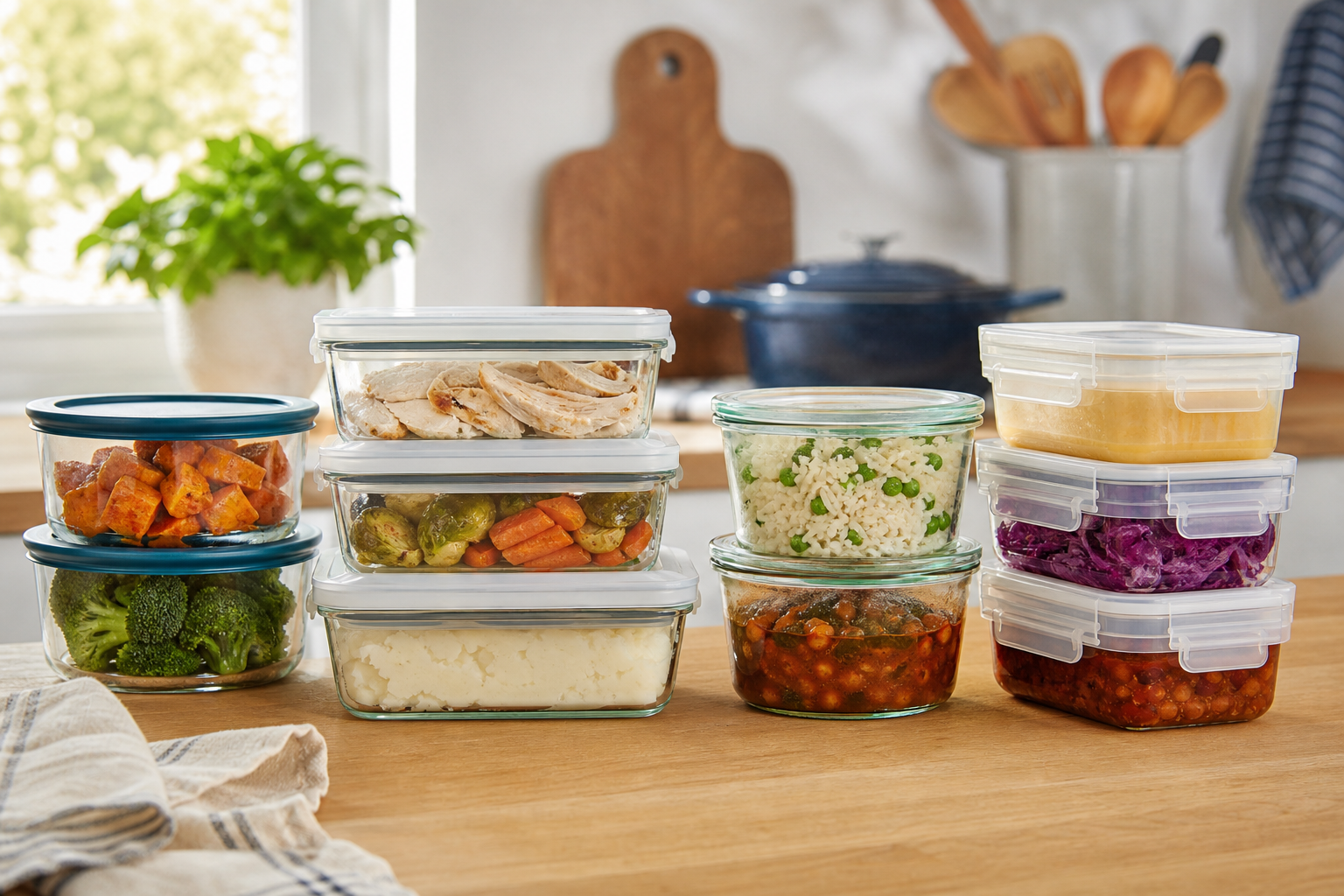
Leftovers fail for three reasons: they sat out too long, they cooled too slowly, or they stayed in the fridge past their window. USDA’s Food Safety and Inspection Service puts numbers on all three. Refrigerate within 2 hours of cooking, or within 1 hour if the room or the car is above 90 °F (32 °C). Keep the fridge at 40 °F (4 °C) or below. Eat cooked leftovers within 3 to 4 days, or freeze them.
None of it needs special gear beyond containers and an appliance thermometer. Here is how each rule works and where people usually break it.
The 2-hour rule
Bacteria grow fastest between 40 °F and 140 °F (4 to 60 °C), the range USDA calls the danger zone. Cooked food passes through it twice: once on the way down after cooking and once on the way up when you reheat. The 2-hour limit covers the total time food spends there at room temperature, and the clock starts when the food comes off the heat, not when dinner ends.
The common failure is the long meal. A pot of rice served at 7 p.m. and cleared at 9:30 has already used its 2 hours. Put the leftovers away as soon as everyone has served themselves, not when the table is cleared. At a cookout above 90 °F, the window drops to 1 hour.
Cool it fast: shallow beats deep
You don’t need to wait for food to cool before refrigerating it. USDA says hot food can go straight into the fridge. The problem is mass. A full pot of chili holds heat in its center for hours, and that center sits in the danger zone the whole time, even inside a cold fridge.
Restaurants work to a stricter standard. The FDA Food Code requires cooked food to drop from 135 °F to 70 °F within 2 hours, and from 70 °F to 41 °F within the next 4. A home fridge can’t pull a 6-quart pot through that curve. Small, shallow containers can.
How to cool a big batch:
- Divide it into shallow containers. Two inches of food or less cools quickly.
- Cut roasts and whole birds into smaller pieces before you refrigerate them.
- For soup or stock, set the pot in a sink of ice water and stir for a few minutes before you portion it.
- Leave containers uncovered or loosely covered until they’re cold, then seal them.
- Don’t stack hot containers. Leave space around them so cold air can reach every side.
The fridge itself
The 3-to-4-day rule assumes the fridge really is at 40 °F or below. Many dials show numbers from 1 to 7 that don’t map to any temperature, so a cheap appliance thermometer on the middle shelf is the only way to know. If it reads above 40 °F, turn the dial colder and check again the next day. The door is the warmest spot, so keep leftovers on the shelves.
An overpacked fridge warms up. Cold air has to circulate, and a wall of containers blocks it. If the fridge is full after a holiday meal, freeze some of the leftovers right away instead of squeezing everything onto the shelves.
How long each leftover lasts
USDA FSIS storage times for cooked food, fridge at 40 °F or below and freezer at 0 °F:
| Leftover | Fridge | Freezer, for quality |
|---|---|---|
| Cooked meat or poultry | 3–4 days | 2–6 months |
| Soups and stews | 3–4 days | 2–3 months |
| Pizza | 3–4 days | 1–2 months |
| Chicken nuggets or patties | 3–4 days | 1–3 months |
| Cooked fish | 3–4 days | 4–6 months |
| Egg, chicken, ham, tuna or macaroni salad | 3–5 days | Doesn’t freeze well |
| Hard-cooked eggs | 1 week | Doesn’t freeze well |
The freezer times are for quality. Food kept at 0 °F stays safe indefinitely; it just gets drier and blander. The full chart, raw foods included, is in our fridge and freezer storage times chart.
Count the days from when you cooked the food, not when you last opened the container. Write the date on a piece of masking tape. Without a date, day three and day six look identical.
Freeze early, not on day four
If you know you won’t finish a batch, freeze it the day you make it. Freezing stops bacterial growth but doesn’t reverse it, so a container frozen on day one comes out of the freezer in better shape than one frozen the evening before it expires. Our guide to freezing meal prep without freezer burn covers containers, headspace and how much a freezer can handle at once.
Reheat to 165 °F
Reheat leftovers to 165 °F (74 °C) all the way through. Bring sauces, soups and gravies to a rolling boil. In a microwave, cover the dish, stir halfway and let it stand a minute before you check, because microwaves leave cold spots. Check the center with a food thermometer; our guide to using and calibrating a thermometer explains where to put the probe.
Rice gets its own rules, because one of the toxins it can carry survives reheating. See is it safe to reheat rice.
Who should be stricter
Pregnant people, adults 65 and older, young children and anyone with a weakened immune system get sicker from food poisoning and are more likely to need a hospital. For them, keep to the short end of every window, reheat everything to 165 °F, and skip leftovers whose history you don’t know.
When in doubt
You can’t smell, see or taste most of the bacteria that cause food poisoning. A leftover that looks fine on day six is still past USDA’s window. The rule FSIS prints is the one worth keeping: when in doubt, throw it out. For dates on packaged food, which work differently, see best by, use by and sell by.
Sources
USDA Food Safety and Inspection Service, Leftovers and Food Safety.
USDA Food Safety and Inspection Service, Danger Zone 40 °F to 140 °F.
FoodSafety.gov, Cold Food Storage Chart.
U.S. Food and Drug Administration, Food Code, section 3-501.14, Cooling.
Questions we get
Can I put hot food straight in the fridge?
Yes. USDA says hot food can go directly into the refrigerator. What matters is that it cools fast, so split big batches into shallow containers instead of chilling a full stockpot.
How long do leftovers last in the fridge?
Three to four days for cooked meat, poultry, soups, stews and pizza, per USDA FSIS. Egg, tuna, chicken and macaroni salads get 3 to 5 days. If you won't eat it in that window, freeze it.
Can I tell if leftovers are bad by smelling them?
No. The bacteria that cause food poisoning usually don't change how food looks, smells or tastes. Go by the date on the container, not your nose.
Does freezing kill bacteria in leftovers?
No, it stops them growing. Food held at 0 °F stays safe indefinitely, but whatever was in it when it went in is still there when it thaws. That's why leftovers should be frozen early, not on day four.
Who stands behind this post
Dev Patel
Tester, kitchen gearTests scales, thermometers, air fryers and storage gear. Former restaurant equipment buyer.
- Posts written
- 17
- Posts reviewed
- 0
Dr. Iris Kwan, RD
Nutrition reviewerRegistered dietitian. Reviews every app post and label guide before it publishes, and signs them.
Signs: App posts and label guides
- Posts written
- 0
- Posts reviewed
- 34
Corrections. Spotted a wrong figure? Email desk@foodblogblog.com. We correct within five business days and date the change. No link on this page carries an affiliate tag yet. When a shop program opens, tagged links will be marked.