Cups to Grams by Ingredient
A cup of all-purpose flour is 125 g by USDA's figure and 120 g by King Arthur's. A cup of honey is 339 g, 2.7 times as heavy. USDA cup weights for 34 ingredients, and why the way you fill the cup changes the number.
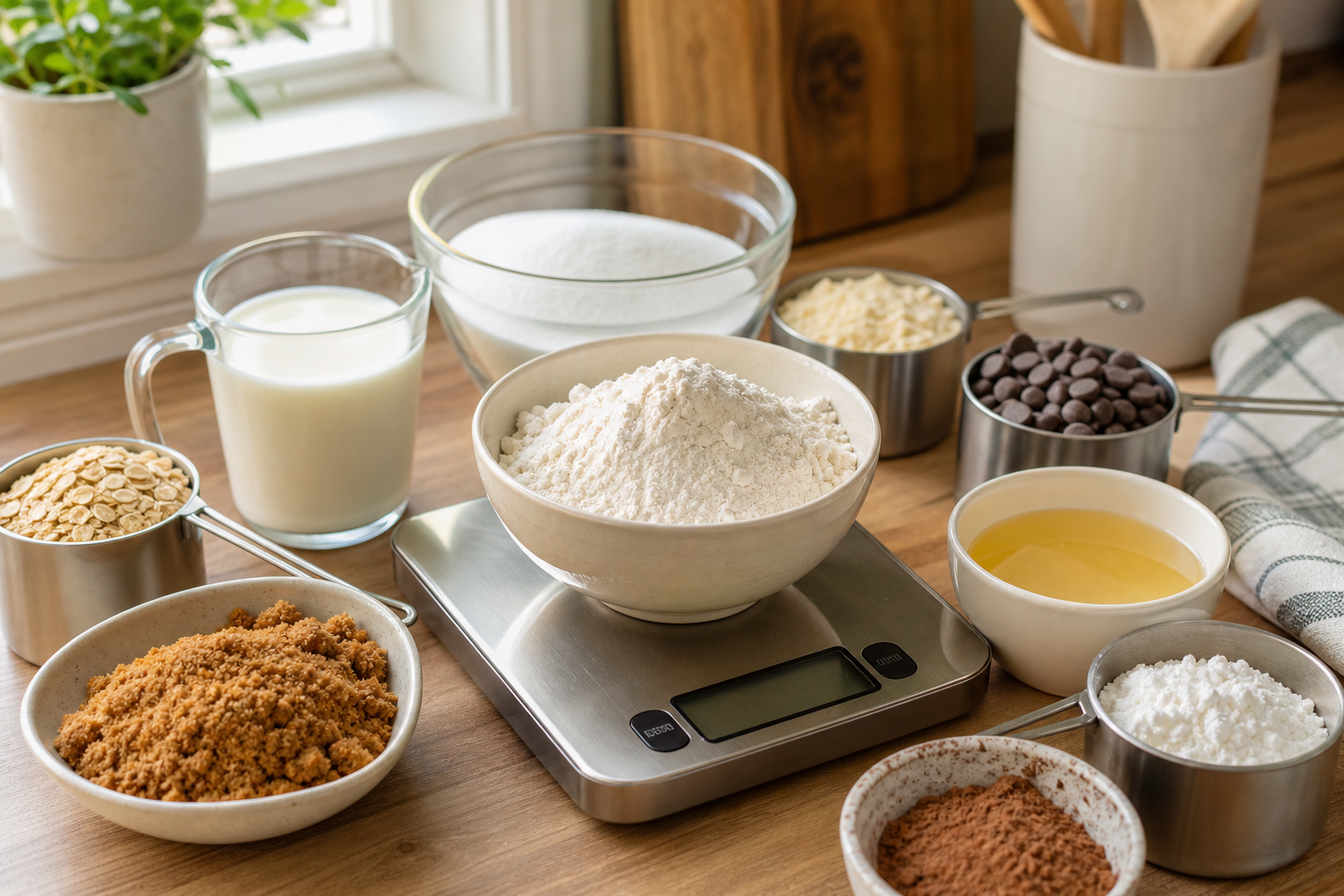
A cup measures volume, and ingredients don’t weigh the same per cup. A cup of all-purpose flour is 125 g. A cup of granulated sugar is 200 g. A cup of honey is 339 g, 2.7 times the weight of the flour. A cup of raw spinach is 30 g.
For baking, those gaps change the recipe. For a food log they change the number. A cup of uncooked long-grain rice is 185 g, or 675 calories. A cup of cooked rice is 158 g, or 205 calories. Same cup, same food, 470 calories apart.
How to use this table
- The weights are for a US cup, 236.6 mL, from USDA FoodData Central household measures, unless the notes say otherwise.
- For tablespoons, divide the cup weight by 16. For teaspoons, divide by 48. Butter: 227 g ÷ 16 = 14.2 g per tablespoon.
- Fill the cup the way the note says. Flour gets spooned into the cup and leveled. Brown sugar gets packed. These weights assume that.
- For a calorie app, skip the cup. Weigh the ingredient, log grams, and use the table only to convert a recipe written in cups.
The table
| Ingredient | Grams per US cup | Note |
|---|---|---|
| All-purpose flour | 125 | Spooned and leveled; King Arthur uses 120 |
| Whole-wheat flour | 120 | Spooned and leveled |
| Cornstarch | 128 | Spooned and leveled |
| Cocoa powder, unsweetened | 86 | Spooned and leveled |
| Granulated sugar | 200 | |
| Brown sugar | 220 | Packed |
| Powdered sugar | 120 | Unsifted |
| Table salt | 292 | 1 teaspoon is 6 g |
| Rolled oats | 81 | Dry |
| White rice, long-grain | 185 | Uncooked |
| White rice, long-grain | 158 | Cooked |
| Spaghetti | 140 | Cooked |
| Quinoa | 170 | Uncooked |
| Lentils | 192 | Dry |
| Black beans | 172 | Cooked |
| Dry bread crumbs | 108 | |
| Water | 237 | |
| Whole milk | 244 | |
| Heavy cream | 238 | |
| Plain yogurt, whole milk | 245 | |
| Sour cream | 230 | |
| Butter | 227 | Two US sticks |
| Olive oil | 216 | Lighter than water |
| Canola oil | 218 | Lighter than water |
| Honey | 339 | |
| Peanut butter | 258 | |
| Cheddar | 113 | Shredded |
| Parmesan | 100 | Grated |
| Almonds | 143 | Whole |
| Semisweet chocolate chips | 168 | |
| Raisins | 165 | Packed |
| Blueberries | 148 | Fresh |
| Onion | 160 | Chopped |
| Spinach | 30 | Raw |
Why the way you fill the cup changes the number
Flour packs. Dip a measuring cup into a bag and sweep it level, and the rim presses flour into the cup. You get more than 125 g in the same cup. USDA’s 125 g and King Arthur’s 120 g both assume a light fill: spoon the flour in until it mounds, then level it with a straight edge. The two sources are 5 g apart. Either works if you stick to one.
Brown sugar is meant to be packed, so its 220 g assumes you press it down until it holds the shape of the cup. Loose brown sugar is lighter.
Shape matters more than you’d guess. Whole almonds, chopped onion, shredded cheese and raw spinach all leave air in the cup. Chop or grate them finer and more fits. A cup of spinach at 30 g is so loose that a cup is close to meaningless as a measure.
Liquids are the most reliable cup measures, but not all weigh the same. Water is 237 g a cup. Oil floats on water and weighs less, 216–218 g. Honey weighs 339 g. If you swap oil for butter by volume, you aren’t swapping like for like.
Exceptions and fine print
- Recipes from Australia, Canada and other metric countries use a 250 mL cup, about 6% more than a US cup.
- Nutrition Facts labels use a 240 mL cup, the rounded figure FDA sets for labeling. It’s 1.4% more than a kitchen cup, too small to matter in a recipe.
- Cooked grains depend on the water. The cooked-rice and cooked-spaghetti weights are USDA’s. Yours can differ; see the raw to cooked weight conversion table.
- Fats and sauces are where small spoons add up. A tablespoon of olive oil is 13.5 g and 119 calories; the full list is in Hidden calories per tablespoon.
- Package servings use their own cup weights. The label serving is set by FDA reference amounts, not by your cup; see Serving sizes: why your calorie count is off.
Volume entries are one of the easiest ways to put error into an app log. Weighing in grams is the fix that works in every app, and our calorie app test logged every food by weight for that reason.
Sources
- USDA FoodData Central, SR Legacy household measures for each ingredient listed
- King Arthur Baking, Ingredient Weight Chart
- US Food and Drug Administration, 21 CFR 101.9, for the 240 mL cup used on Nutrition Facts labels
Questions we get
How many grams are in a cup of flour?
125 g of all-purpose flour by USDA FoodData Central, 120 g by King Arthur Baking. Both assume you spoon the flour into the cup and level it. Dipping the cup into the bag packs the flour down, so the same cup weighs more.
Is a cup of water 250 g?
Not a US cup. A US cup is 236.6 mL, so a cup of water is about 237 g. The 250 mL cup is the metric cup used in Australia, Canada and other countries, and recipes from those countries mean 250 mL.
Why does my calorie app show a different weight for a cup?
Apps pull from different databases, and branded entries use the manufacturer's own cup weight. A different weight means a different calorie figure. Weigh the food and log grams, and the cup weight stops mattering.
Who stands behind this post
Mara Ellison
EditorEdits the desk: every test plan, every post, every correction. Twelve years in food and tech journalism.
- Posts written
- 12
- Posts reviewed
- 11
Dr. Iris Kwan, RD
Nutrition reviewerRegistered dietitian. Reviews every app post and label guide before it publishes, and signs them.
Signs: App posts and label guides
- Posts written
- 0
- Posts reviewed
- 34
Corrections. Spotted a wrong figure? Email desk@foodblogblog.com. We correct within five business days and date the change. No link on this page carries an affiliate tag yet. When a shop program opens, tagged links will be marked.