Raw to Cooked Weight Conversion Table
100 g of raw chicken breast cooks down to about 73 g. 100 g of dry rice cooks up to about 281 g. Conversion factors for 10 common foods, worked out from USDA calorie figures, and the places where the shortcut breaks.
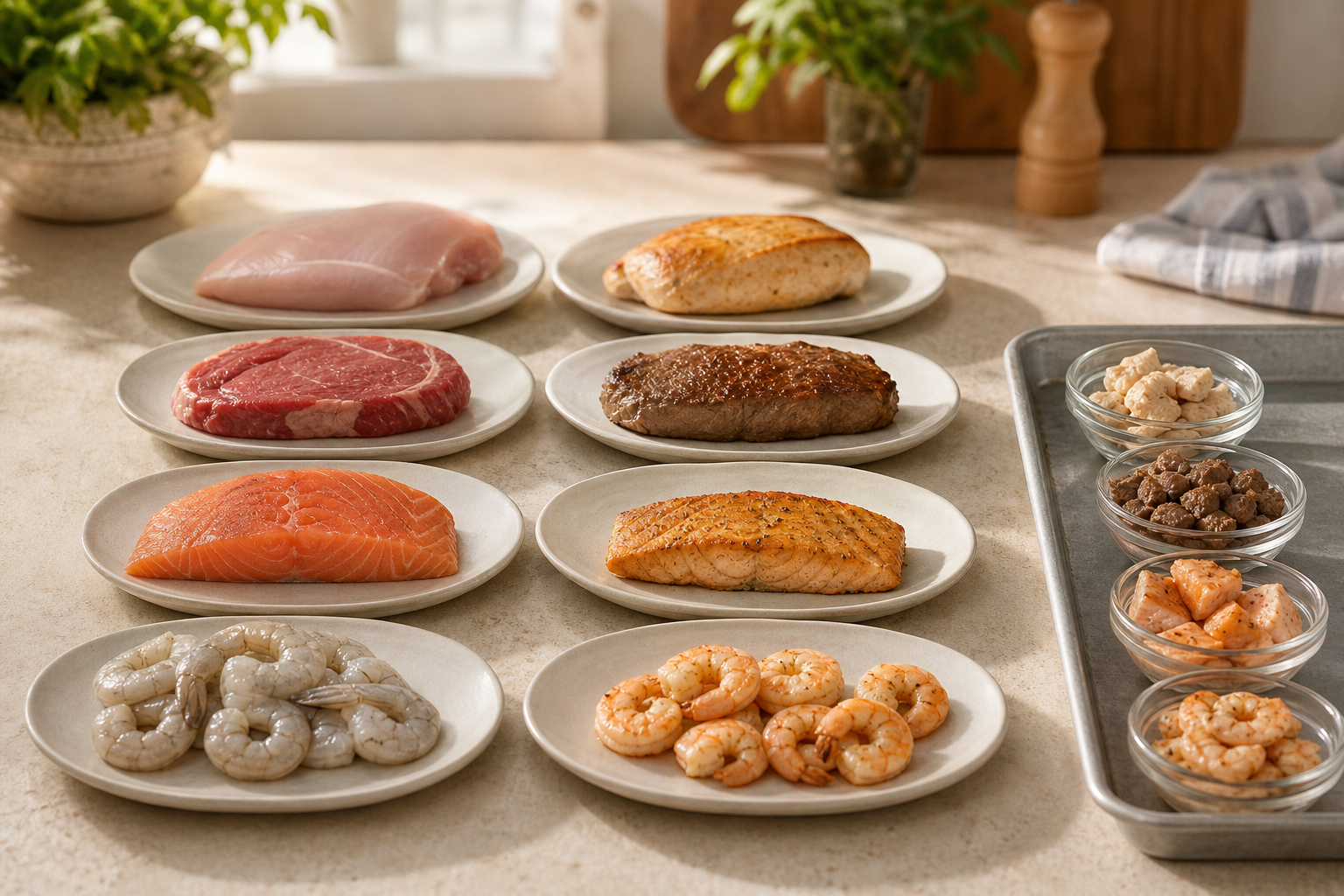
Cooking moves water. Chicken breast loses it, so 100 g raw comes out at about 73 g. Rice, pasta and beans take it on, so 100 g of dry rice comes out at about 281 g. The calories stay roughly where they were. What changes is the weight they’re spread over.
That’s where food logs go wrong. Say you cook 200 g of raw chicken breast, which is 240 calories. It comes out of the oven at about 145 g. Log those 145 g against a raw entry and you record 174 calories, 66 short. Log the 200 g raw weight against a roasted entry and you record 330, 90 over.
Rice is worse, because the factor is bigger. 75 g of dry rice is 274 calories and cooks to about 211 g. Log 211 g against a dry-rice entry and you record 770 calories, 496 over.
How to use this table
- Factor is the cooked weight divided by the raw weight. Multiply a raw weight by it to get the cooked weight. Divide a cooked weight by it to get the raw weight you started with.
- To log a cooked portion against a raw entry, divide: 150 g of cooked chicken breast ÷ 0.73 = about 205 g raw.
- To check an app entry, compare its calories per 100 g with the two columns below. If a “cooked rice” entry shows 365 per 100 g, it’s the dry figure under a cooked name.
The factors come from USDA FoodData Central. Each one is the raw figure in calories per 100 g divided by the cooked figure, which assumes the food gains or loses only water.
The table
| Food | Raw or dry, kcal per 100 g | Cooked, kcal per 100 g | Factor | 100 g raw becomes |
|---|---|---|---|---|
| Chicken breast, skinless, roasted | 120 | 165 | 0.73 | 73 g |
| Salmon, Atlantic, wild, dry heat | 142 | 182 | 0.78 | 78 g |
| Potato, flesh and skin, baked | 77 | 93 | 0.83 | 83 g |
| Ground beef 85/15 | 215 | about 250 | 0.86 by calories; real yield is lower | Weigh it |
| Pasta, enriched, boiled | 371 | 158 | 2.35 | 235 g |
| Black beans, boiled | 341 | 132 | 2.58 | 258 g |
| White rice, long-grain | 365 | 130 | 2.81 | 281 g |
| Lentils, boiled | 352 | 116 | 3.03 | 303 g |
| Quinoa | 368 | 120 | 3.07 | 307 g |
| Oats, cooked with water | 379 | 71 | 5.34 | 534 g, depends on the water |
Protein follows the same factor. Raw chicken breast has 22.5 g per 100 g and roasted has 31.0 g. Here too, the protein didn’t grow. The water left.
Where the shortcut breaks
Fatty meat. The calorie ratio for 85/15 ground beef says 0.86, but fat renders into the pan, and if you pour it off, its calories go with it. The ratio method assumes nothing leaves except water, so it gets fatty meat wrong. For ground beef, weigh it raw and log it raw. Or weigh the drained, cooked meat and use a cooked entry for the same lean-to-fat ratio.
Grains and oats. The cooked weight depends on how much water you use and how long you cook. USDA’s cooked oats are made with plenty of water, which is why the factor is 5.34. A thick bowl holds less water and has a lower factor. Pasta cooked soft weighs more than pasta cooked al dente, and drained rice comes out differently from rice cooked by absorption.
Added fat. A tablespoon of olive oil in the pan is 119 calories, and it isn’t in either column. Log it on its own. The hidden calories per tablespoon table covers oils, butters and sauces.
Weigh your own pot once
The most accurate factor is the one from your own stove. It takes one batch:
- Weigh the empty pot and write the number on a piece of tape on the handle.
- Weigh the raw or dry food going in.
- Cook as you normally do, then weigh the pot with the food and subtract the pot.
- Divide cooked weight by raw weight. That’s your factor.
Say 500 g of dry rice comes out at 1,350 g. Your factor is 2.70, not 2.81. A 180 g bowl is then 66.7 g dry, or 243 calories. Keep the factor for that recipe and that pot and reuse it.
For the case for weighing raw at all, read Should you weigh food raw or cooked? For converting cup measures into grams first, use Cups to grams by ingredient. Picking the wrong entry in an app adds its own error on top, and the gap between apps is in our 30-day calorie app test.
Sources
- USDA FoodData Central, SR Legacy raw and cooked entries for: chicken breast, meat only; Atlantic salmon, wild; potatoes, flesh and skin; ground beef, 85% lean; enriched pasta; black beans; long-grain white rice; lentils; quinoa; oats, regular and quick, cooked with water
Questions we get
Should I weigh food raw or cooked?
Raw, when you can. A raw weight doesn't change with how long you cooked the food or how much water it took up. If you weigh cooked, log it against a cooked entry, or divide by the factor in this table and log the raw equivalent.
Why is my rice factor different from 2.81?
How much water the rice keeps depends on the ratio, the pot, the lid and whether you drain it. The 2.81 comes from USDA's prepared rice. Your pot can come out a little higher or lower, which is why weighing your own batch once is worth doing.
Do foods lose calories when they cook?
Starches and lean meat mostly gain or lose water, so their calories stay put. Fatty meat is the exception: fat renders into the pan. Oil you add in the pan puts calories in, and it isn't in either the raw or the cooked entry.
Do I need to track this closely?
Not everyone does. If you have a history of disordered eating, are pregnant, or manage a condition such as diabetes, set any targets with your clinician or a registered dietitian before you start weighing food.
Who stands behind this post
Mara Ellison
EditorEdits the desk: every test plan, every post, every correction. Twelve years in food and tech journalism.
- Posts written
- 12
- Posts reviewed
- 11
Dr. Iris Kwan, RD
Nutrition reviewerRegistered dietitian. Reviews every app post and label guide before it publishes, and signs them.
Signs: App posts and label guides
- Posts written
- 0
- Posts reviewed
- 34
Corrections. Spotted a wrong figure? Email desk@foodblogblog.com. We correct within five business days and date the change. No link on this page carries an affiliate tag yet. When a shop program opens, tagged links will be marked.